The Difference Between Medication Orders and Medication Administration Inside the EPIC MAR
- Alexis Wilkinson CPC

- Jan 12
- 2 min read
Updated: Jan 25
The Difference Between Medication Orders and Medication Administration
In an Electronic Health Record (EHR) such as Epic, medication orders and medication administration are related—but they are not the same thing. Understanding the distinction is critical for accurate charge capture, auditing, and compliance.
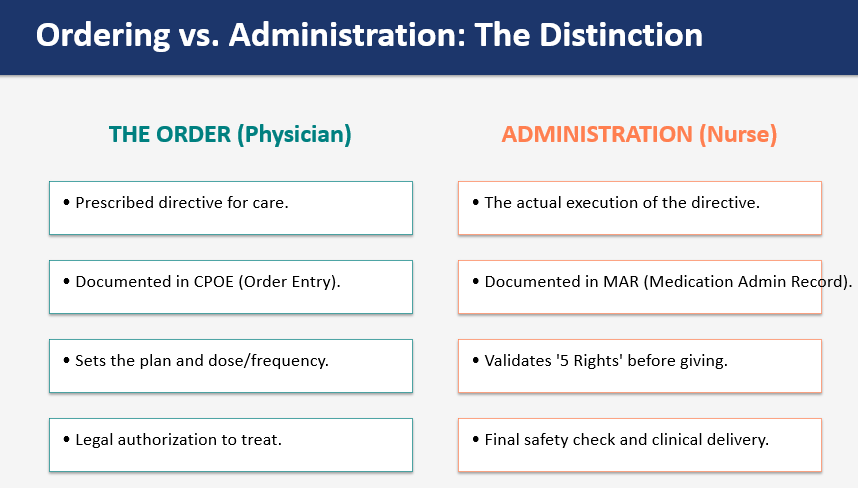
1. Medication Orders (The Authorization)
A medication order represents the provider’s intent.
It answers the question:“What does the provider want to be given?”
Key characteristics:
Entered by a licensed provider (MD, DO, NP, PA)
Lives in the Orders section of the chart
May include:
Drug name
Dose
Route (IV, IM, PO, SubQ)
Frequency
Start date/time
Important for coders: Orders alone are not billable.If a medication is ordered but never administered, there is no chargeable service.
2. Medication Administration (The Action)
Medication administration documents what was actually given to the patient.
It answers the question:“What did the nurse administer, when, how, and where?”
Key characteristics:
Documented by nursing staff
Lives in the Medication Administration Record (MAR)
Includes:
Administration status (Given, Held, Not Given)
Date and time
Route
Dose actually administered
IV site (when applicable)
This Represents patient care delivered
Important for coders: Administration is what supports billing and charge capture.
3. Why This Difference Matters for Coding & Billing
Scenario | Ordered? | Administered? | Billable? | |
Medication ordered but patient refused | ✅ | ❌ | ❌ | |
Medication ordered but discontinued | ✅ | ❌ | ❌ | |
Medication ordered and given | ✅ | ✅ | ✅ | |
PRN ordered, never used | ✅ | ❌ | ❌ | |
IV medication with start/stop times documented | ✅ | ✅ | ✅ |
4. High-Risk Area: IV Medications & Infusions
This distinction is especially critical for:
IV pushes
IV infusions
Hydration
Antibiotics
Sequential vs concurrent infusions
For these services, coders must verify:
Start time
Stop time
Route
Separate IV access (when applicable)
The order may say “IV,” but only the MAR confirms how it was actually delivered.
5. Common Coder Mistakes
Charging based on the order instead of the MAR
Missing that a medication was “Held” or “Not Given”
Assuming a continuous infusion occurred without stop times
Overlooking that a PRN medication was never administered
Key Takeaway
Medication Orders = Permission
Medication Administration = Proof
Common Challenges with Medication Orders
Several issues can arise if medication orders are unclear or incomplete:
Ambiguity: Vague instructions can lead to incorrect dosages or routes.
Omissions: Missing information like frequency or duration can cause confusion.
Discrepancies: Differences between what is ordered and what is administered may occur if communication breaks down.
Delays: Unclear orders can slow down treatment, especially in critical care settings.
Healthcare teams must work together to review and clarify orders promptly to avoid these problems.
.


Comments